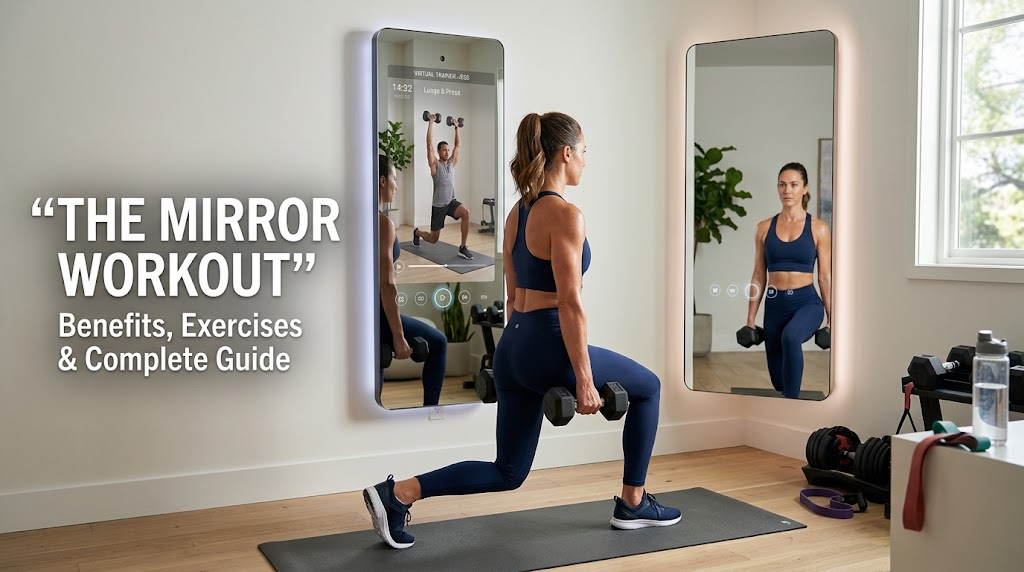
The the mirror workout has become a popular concept in home fitness because it combines the convenience of exercising at home with the guidance of a studio-style class. Instead of following a trainer on a traditional television or phone screen, users can see an instructor alongside their own reflection while exercising.
The original MIRROR concept was designed as an interactive home gym that could stream live and on-demand classes. Its full-length reflective display allowed users to see themselves while following a trainer, creating an experience that felt closer to an in-person fitness class.
Today, the phrase the mirror workout can refer both to this type of connected fitness technology and, more generally, to exercising in front of a regular mirror to monitor technique. Understanding the difference helps explain why the idea continues to attract people interested in convenient, visually guided workouts.
What Is the Mirror Workout?
At its simplest, the mirror workout involves exercising while using a mirror to observe your movements. The reflection can make it easier to notice posture, alignment and movement patterns while you perform exercises.
The technology-focused version takes that idea further. A smart fitness mirror combines a reflective surface with a digital display, allowing an instructor and workout information to appear while the user can still see their reflection.
Early coverage of MIRROR described it as an interactive home gym offering live and on-demand fitness classes. The system incorporated a camera, microphone and speakers, creating a more interactive experience than a standard workout video.
That combination is what made the mirror workout different from simply watching an exercise video. Instead of looking away from your own body to follow the instructor, you can watch both the instructor and yourself.
How Does the Mirror Workout Work?
The basic principle behind the mirror workout is visual feedback. When you perform a squat, lunge, push-up or other movement, you can observe your body while comparing your position with the instructor.
Connected systems can add another layer of guidance. Depending on the platform and setup, users may have access to live classes, recorded sessions, workout categories and performance information.
Earlier versions of MIRROR offered classes covering areas such as cardio, strength training, yoga, Pilates, barre and boxing. Classes were available at different difficulty levels, making the platform suitable for people with different fitness backgrounds.
For someone who dislikes crowded gyms or has a busy schedule, the mirror workout can make structured exercise more accessible without requiring a trip to a fitness studio.
The Benefits of the Mirror Workout
One major advantage of the mirror workout is convenience. A home-based session removes travel time and allows users to exercise in a familiar environment.
Convenience can matter when building a consistent fitness routine. A workout that is available in the home may be easier to fit around work, family responsibilities and unpredictable schedules.
Another advantage is visual awareness. Watching yourself perform an exercise can help you notice whether your knees, hips, shoulders or back are moving in the intended direction. However, a mirror is not a substitute for professional coaching when someone is learning a technically demanding movement.
The interactive nature of the mirror workout can also make home exercise feel less isolated. Live classes and instructor guidance can provide motivation that a basic exercise video may not offer.
The Mirror Workout for Strength Training
Strength training can work particularly well with the mirror workout because visual feedback can help users pay attention to positioning.
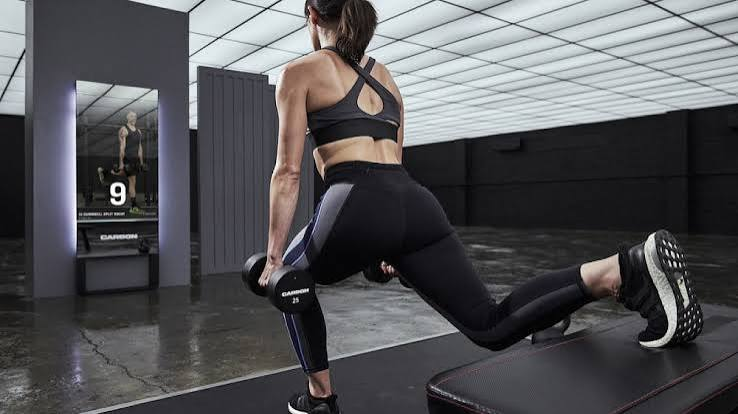
Exercises such as bodyweight squats, lunges, presses and controlled core movements can be performed while watching alignment. The goal should not be to stare constantly at the reflection, however. Good technique requires awareness of how the entire body feels and moves.
Beginners should start with manageable resistance and prioritize controlled movement. Increasing weight or intensity too quickly can make it harder to maintain proper form.
The mirror can therefore function as a useful feedback tool, but it should support—not replace—sound exercise instruction.
The Mirror Workout for Cardio and HIIT
Cardio is another area where the mirror workout can be useful. Interactive platforms have historically offered energetic classes involving movements such as jumping exercises, high knees and other forms of cardiovascular training.
High-intensity interval training can be demanding, so users should select a level appropriate for their current fitness. There is no advantage to choosing an advanced class simply because it looks impressive.
A sustainable the mirror workout routine should leave room for recovery. Mixing higher-intensity sessions with easier movement, mobility work or rest can make the overall routine more manageable.
The Mirror Workout for Yoga and Mobility
Not every the mirror workout needs to be intense. Yoga, stretching and mobility sessions can provide a slower alternative on days when high-impact exercise is not appropriate.
A mirror can be particularly useful for checking general alignment during controlled movements. However, flexibility varies considerably from person to person, so users should avoid forcing a position simply to match what they see on screen.
The objective should be comfortable, controlled movement rather than trying to reproduce an instructor’s range of motion exactly.
Can You Do a Mirror Workout Without a Smart Mirror?
Absolutely. A smart fitness device is not essential for the basic idea behind the mirror workout.
A conventional full-length mirror can provide visual feedback while you follow a workout from another device. You can position a laptop, tablet or television nearby and use the mirror to observe your form.
This approach can make the concept considerably more affordable. It also allows you to choose your own workout programs rather than depending on a particular connected-fitness ecosystem.
The main difference is that a traditional mirror does not provide the integrated instructor, speakers, camera or interactive features associated with dedicated smart fitness equipment.
Is the Mirror Workout Worth It?
Whether the mirror workout is worthwhile depends on your goals, available space and budget.
The original MIRROR was positioned as a premium home fitness product, combining a sleek full-length design with interactive classes. Historical reviews reported a substantial equipment cost plus a monthly membership for classes.
For someone who values guided classes and frequently exercises at home, that type of setup may be attractive. For someone who simply needs basic exercise equipment and a few reliable routines, a traditional mirror and free or inexpensive workout resources may provide better value.
The most important factor is not the technology itself. Consistency, appropriate exercise selection, recovery and good technique have a much greater influence on a successful fitness routine.
How to Use a Mirror Safely During Exercise
Using the mirror workout effectively requires more than simply watching your reflection. Make sure you have enough clear floor space to move safely and keep equipment away from areas where you could trip.
Avoid becoming so focused on your appearance that you ignore how the movement feels. If an exercise causes sharp pain, dizziness or unusual discomfort, stop and assess the situation rather than trying to push through it.
Beginners may benefit from learning unfamiliar movements from a qualified fitness professional before attempting them independently.
A mirror is best viewed as a feedback tool. It can help you observe movement, but it cannot diagnose an injury or guarantee perfect technique.
Why the Mirror Workout Remains Interesting
The continuing appeal of the mirror workout comes from a simple idea: people want the structure and motivation of a fitness class without necessarily leaving home.
Connected fitness technology has attempted to bridge the gap between traditional gyms and home exercise by combining instructors, digital content, performance tracking and community features.
At the same time, the basic mirror concept remains useful even without sophisticated technology. A simple reflection can encourage greater awareness of posture and movement during everyday training.
That combination of convenience and feedback explains why the mirror workout remains an interesting concept in modern home fitness.
Conclusion
The mirror workout combines visual feedback, guided exercise and the convenience of home training. Whether someone uses a dedicated interactive fitness mirror or simply exercises in front of a traditional mirror, the underlying idea is to become more aware of movement while following a structured routine.
The technology can make workouts feel more engaging, while a simple mirror can provide useful visual feedback without the expense of specialized equipment. The best choice depends on individual goals, budget, available space and preferred training style.
Ultimately, the mirror workout is not a magic fitness solution. Its value comes from making exercise easier to access, more engaging and potentially more consistent. When combined with appropriate intensity, good technique and adequate recovery, it can be a useful part of a balanced home fitness routine.
FAQs About The Mirror Workout
What is the mirror workout?
The mirror workout is exercise performed while using a mirror for visual feedback. It can involve a smart fitness mirror or an ordinary full-length mirror.
Is the mirror workout good for beginners?
Yes. Beginners can use a mirror to observe basic movements, although professional instruction can be helpful when learning unfamiliar or technically difficult exercises.
Can I do the mirror workout without a smart mirror?
Yes. A regular full-length mirror can be used while following a workout from a phone, tablet, computer or television.
What exercises work well with a mirror?
Strength exercises, yoga, Pilates, mobility work and many cardio routines can be performed with visual feedback from a mirror.
Does the mirror workout help with fitness?
It can support a consistent exercise routine by making workouts convenient and providing visual feedback, but results depend primarily on regular training, appropriate exercise and healthy habits.