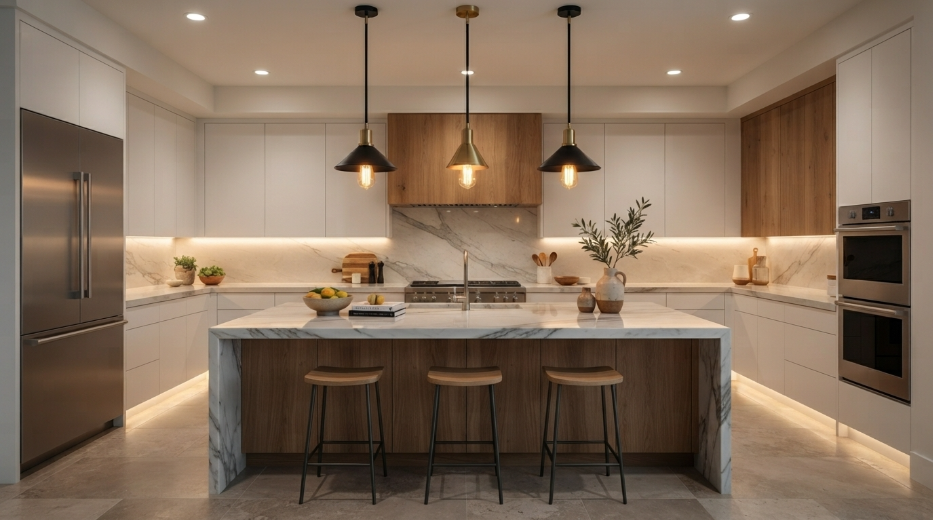
Introduction
Choosing the right modern kitchen island lighting can completely transform the look and functionality of a kitchen. The island is often the heart of the room, serving as a workspace, dining spot, gathering area, and social center. Because of this, its lighting needs to be both attractive and practical.
The best modern kitchen island lighting combines visual appeal with useful task illumination. Pendant lights, linear fixtures, recessed lighting, and contemporary chandeliers can all create different moods while providing focused light where it is needed most.
A successful kitchen lighting design should also work with the cabinets, countertops, flooring, appliances, and overall architectural style. When these elements complement one another, the result feels intentional rather than simply decorated.
Why Modern Kitchen Island Lighting Matters
Good modern kitchen island lighting does more than make an island look beautiful. It provides focused illumination for chopping, preparing food, eating, working, or entertaining. It can also become one of the most noticeable decorative features in the kitchen.
The island is typically positioned in an open and highly visible area, which means a well-designed fixture can act as a visual centerpiece. At the same time, poorly positioned lighting can create glare, shadows, or an unbalanced appearance.
ENERGY STAR recommends pendant fixtures over high-use kitchen areas and notes that positioning them carefully can help control glare and reduce unwanted shadows.
Popular Modern Kitchen Island Lighting Styles
Sleek Pendant Lights
Pendant lights remain one of the most popular choices for modern kitchen island lighting. Their simple forms work particularly well with contemporary kitchens because they provide focused illumination without overwhelming the room.
Glass, metal, matte finishes, and geometric designs can all create a modern appearance. A row of matching pendants can look especially effective over a long rectangular island.
For a minimalist kitchen, choose pendants with clean silhouettes and limited decorative details. In a larger kitchen, oversized pendants can create a stronger architectural statement.
Linear Suspension Fixtures
A linear suspension fixture is another excellent option for modern kitchen island lighting, particularly when the island is long. Instead of installing several individual lights, a single horizontal fixture can distribute illumination across the entire surface.
This style works well in contemporary and transitional interiors. Slim black, brushed metal, brass, or integrated LED designs can complement modern cabinetry while maintaining a streamlined appearance.
Linear fixtures are also useful when you want the lighting to visually echo the horizontal shape of the island.
Contemporary Chandeliers
A modern chandelier can bring more personality to modern kitchen island lighting. Unlike traditional chandeliers with elaborate ornamentation, contemporary versions often use simple geometric structures, glass globes, metal frames, or sculptural forms.
This approach is particularly effective when the kitchen opens into a dining or living area. The chandelier can become a decorative bridge between the kitchen and the surrounding spaces.
Recessed and Integrated LED Lighting
Recessed fixtures can provide clean background illumination while allowing pendant or decorative fixtures to remain the main visual focus. Integrated LED systems can also deliver efficient illumination in a compact format.
ENERGY STAR explains that LED fixtures are available in numerous residential applications, including pendant, recessed, surface-mounted, and under-cabinet lighting.
Combining recessed lighting with decorative modern kitchen island lighting can create a layered design rather than depending on one fixture to illuminate the entire room.
Choosing the Right Light Color
Color temperature plays an important role in the appearance of modern kitchen island lighting. Light color is measured in Kelvin, with lower values generally appearing warmer and higher values appearing cooler.
Warm white lighting can create a comfortable, welcoming atmosphere, while neutral or cooler white light can provide a crisper appearance that may suit work-focused kitchen areas.
ENERGY STAR identifies approximately 2700K–3000K as warmer light and notes that higher color temperatures produce cooler, bluer tones.
For many modern kitchens, a balanced neutral-to-warm appearance works well because it provides useful visibility without making the room feel overly clinical.
Getting the Scale Right
One of the most common mistakes with modern kitchen island lighting is choosing fixtures that are too small or too large for the island.
A fixture should relate to the island’s dimensions and the overall scale of the kitchen. A tiny pendant over a large island can look lost, while an oversized fixture in a compact kitchen may dominate the space.
The ceiling height also matters. Tall ceilings can accommodate larger or longer fixtures, while lower ceilings may benefit from compact pendants or streamlined flush-mounted designs.
Rather than focusing only on the size of an individual fixture, consider how the entire lighting arrangement interacts with the island and surrounding architecture.
How Many Pendant Lights Should You Use?
The number of pendants depends on the island’s length, fixture size, ceiling height, and desired visual effect. Two large pendants may work beautifully over a medium-sized island, while three smaller fixtures can create a balanced rhythm over a longer countertop.
Spacing should look intentional rather than crowded. The goal is to distribute light evenly across the working surface while maintaining comfortable sightlines for people sitting or standing at the island.
When planning modern kitchen island lighting, consider the position of seating as well. Fixtures should provide illumination without hanging directly in a way that obstructs conversation or creates uncomfortable glare.
Layering Your Kitchen Lighting
The most effective modern kitchen island lighting rarely works alone. Layered lighting combines ambient, task, and accent illumination to create a flexible environment.
Pendant or linear fixtures can provide task lighting directly above the island. Recessed ceiling fixtures can illuminate the wider kitchen, while under-cabinet lighting can brighten countertop work areas.
ENERGY STAR specifically highlights under-cabinet lighting as a way to provide direct illumination on kitchen work surfaces while helping minimize shadows.
This layered approach allows homeowners to use brighter illumination when preparing meals and softer lighting when relaxing or entertaining.
Dimmers and Smart Lighting
Adding dimming capability can make modern kitchen island lighting considerably more versatile. Bright lighting may be useful during food preparation, while a softer setting can create a relaxed atmosphere during dinner.
Modern LED fixtures may also support smart controls, allowing users to adjust brightness or lighting scenes. ENERGY STAR notes that LED technology can support dimming and color-tuning features in suitable products.
Before purchasing a fixture, check that the light source and dimmer are compatible. Some integrated LED products require specific controls.
Choosing Energy-Efficient Lighting
Energy efficiency is another important consideration when selecting modern kitchen island lighting. LED technology is widely available and can provide long-lasting illumination while using less energy than traditional incandescent lighting.
ENERGY STAR states that certified LED lighting can use substantially less energy than standard incandescent lighting and can last much longer.
When comparing fixtures, look beyond wattage. Brightness is measured in lumens, while color appearance is measured in Kelvin. ENERGY STAR recommends considering lumens when determining how much light a bulb or fixture produces.
Matching Lighting With Kitchen Design
The best modern kitchen island lighting should complement the existing design rather than compete with it. In a minimalist kitchen, simple black or metallic pendants can reinforce clean architectural lines.
A kitchen with warm wood cabinets may benefit from brass, bronze, or softly colored glass fixtures. For a high-contrast contemporary space, sculptural black fixtures can create an eye-catching focal point.
Think about the finish of cabinet hardware, faucets, appliances, and other metal details. Matching every finish is not always necessary, but creating a deliberate relationship between materials can make the room feel more cohesive.
Common Mistakes to Avoid
Choosing modern kitchen island lighting based only on appearance can lead to practical problems. A beautiful fixture may still provide insufficient light, produce excessive glare, or hang at an uncomfortable height.
Another mistake is relying on a single light source for the entire kitchen. Layered illumination generally creates a more comfortable and functional environment.
Ignoring maintenance is also worth avoiding. Open decorative fixtures can collect dust and grease more easily in busy kitchens, so consider how simple the fixture will be to clean before making a final decision.
Conclusion
The right modern kitchen island lighting can combine functionality, atmosphere, and contemporary style in one of the most important areas of the home. Pendant lights, linear fixtures, chandeliers, and integrated LEDs each offer different ways to illuminate an island while enhancing the kitchen’s overall design.
The strongest results come from considering scale, spacing, color temperature, brightness, controls, and the relationship between island lighting and other fixtures. Energy-efficient LED options can also provide practical long-term benefits.
Ultimately, the best modern kitchen island lighting is the solution that makes the island comfortable to use while complementing the character of the entire kitchen.
FAQs About Modern Kitchen Island Lighting
What is the best lighting for a kitchen island?
Pendant lights and linear suspension fixtures are popular choices because they provide focused illumination while adding a strong decorative element.
How many lights should go over a kitchen island?
The ideal number depends on island length, fixture size, ceiling height, and spacing. Two larger pendants or three smaller fixtures are common arrangements.
What color temperature is best for kitchen lighting?
Warm-to-neutral white lighting is often a comfortable choice. Around 2700K–3000K produces a warmer appearance, while higher Kelvin temperatures appear cooler.
Are LED lights good for kitchen islands?
Yes. LED fixtures can provide efficient, long-lasting illumination and are available in many modern pendant, recessed, and linear designs.
Should kitchen island lights be dimmable?
Dimmable lighting is highly useful because it allows you to switch between bright task illumination and softer lighting for dining or entertaining.
MORE BLOG: