Introduction
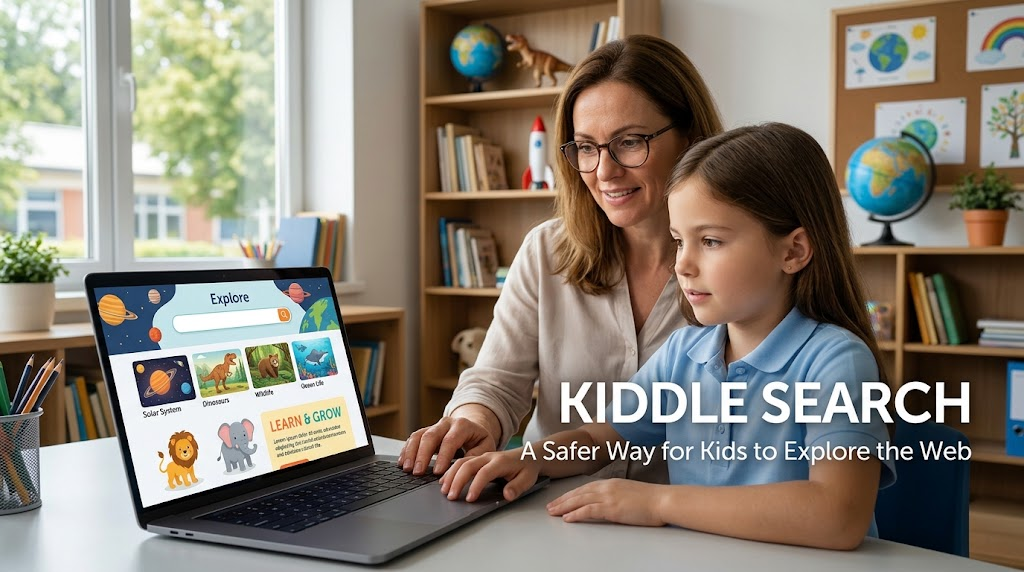
Kiddle search is a child-focused search engine designed to make exploring the internet more suitable for younger users. It presents search results in a visually friendly format and attempts to filter content that may be inappropriate for children.
For parents, teachers, and caregivers, kiddle search can be an interesting alternative to general-purpose search engines when children need to research school subjects, discover educational websites, or explore age-appropriate topics online.
However, no search engine can completely replace adult supervision. Understanding how kiddle search works, what it offers, and what limitations it has can help families make better decisions about children’s online experiences.
What Is Kiddle Search?
Kiddle search is commonly described as a visual search engine designed with children in mind. Its interface emphasizes simplicity, colorful presentation, and content filtering.
Unlike a conventional search experience, kiddle search aims to reduce the likelihood that children will immediately encounter explicit or otherwise unsuitable material. The idea is to create a more comfortable environment for younger internet users who are learning how to find information independently.
The service has become associated with kid-friendly web searching, particularly among parents looking for an additional layer of protection during online research.
How Does Kiddle Search Work?
The basic concept behind kiddle search is similar to using other search engines: a user enters a query into the search box and receives relevant results.
The difference is in how results are selected and presented. Kiddle’s search experience is intended to prioritize websites and pages considered more appropriate for children while filtering potentially inappropriate content.
Search results may also include educational resources, reference websites, and pages that are useful for school-related research. This makes kiddle search particularly relevant for younger students who are developing basic research skills.
It is important to remember that filtering technology is not perfect. Internet content changes constantly, and automated systems cannot guarantee that every result will always be appropriate.
Why Parents May Consider Kiddle Search
One of the main attractions of kiddle search is the idea of creating a more age-conscious search environment.
Children are naturally curious. A simple question about animals, science, history, space, or geography can lead them toward thousands of websites. A child-oriented search tool can potentially reduce some of the risks associated with unrestricted searching.
Kiddle search may also make the internet feel less intimidating for younger users. A simple interface and visually oriented results can help children understand how online search works without immediately exposing them to the enormous range of content available across the wider web.
For parents, however, it should be viewed as a helpful tool rather than a complete online safety solution.
Kiddle Search for School Research
Education is one of the strongest use cases for kiddle search. Students frequently need to look up information for assignments, presentations, science projects, and general learning.
A child searching for information about planets, dinosaurs, famous historical figures, or mathematical concepts can use a search engine designed around younger audiences.
Teachers may also find kid-friendly search tools useful when introducing students to online research. Learning how to choose reliable sources, compare information, and recognize misleading claims is an important part of digital literacy.
Even when using kiddle search, students should learn to evaluate information instead of automatically assuming that every search result is accurate.
Kiddle Search and Online Safety
Online safety involves much more than blocking inappropriate websites. Children also need to understand privacy, passwords, scams, advertisements, misleading information, and responsible communication.
Kiddle search can contribute to a safer browsing environment, but parents should still teach children not to share personal information with strangers online.
Children should understand why they should avoid publishing details such as their home address, passwords, private phone numbers, or other sensitive information. They should also know how to tell a trusted adult if they encounter something online that makes them uncomfortable.
These lessons remain important regardless of which search engine a child uses.

Is Kiddle Search Completely Safe?
No search engine should be considered completely risk-free.
Kiddle search is designed with child-friendly searching in mind, but search technology cannot guarantee perfect filtering. A website can change its content, new pages can appear, and search systems can occasionally misunderstand the meaning of a query.
This is why parental involvement remains valuable. Younger children especially benefit when adults occasionally check what they are searching for and discuss the information they discover.
The best approach is to combine technology with education, communication, and sensible household internet rules.
Kiddle Search Compared With General Search Engines
A major difference between kiddle search and general search engines is the intended audience.
General search engines are designed for the entire internet audience and can return an enormous variety of material. They are powerful research tools, but that broad access also means children may encounter content that is not appropriate for their age.
Kiddle search focuses more specifically on younger users. Its goal is to provide a simplified search experience with stronger emphasis on filtering and child-friendly results.
Neither approach is automatically better for every situation. Adults and older students may need the broader research capabilities of conventional search engines, while younger children may benefit from a more restricted environment.

Benefits and Limitations of Kiddle Search
The biggest potential benefit of kiddle search is its focus on age-appropriate discovery. Its simple design can make searching easier for children, while content filtering may reduce exposure to some unsuitable material.
Another advantage is its usefulness for educational exploration. Children can search for topics connected to homework and personal interests while becoming familiar with basic online research.
At the same time, limitations should be recognized. Filtering systems can make mistakes, search results may not always be comprehensive, and children still need guidance when judging whether information is trustworthy.
For that reason, kiddle search works best as one part of a broader digital-safety strategy.
How Parents Can Make Searching Safer
Parents can make a significant difference by talking openly with children about internet use.
Instead of simply telling children which websites they can or cannot visit, adults can explain why certain content may be unsuitable and teach children how to respond when something unexpected appears.
It is also useful to encourage children to ask questions. If they find confusing information while using kiddle search, they should feel comfortable discussing it with a parent, teacher, or another trusted adult.
As children become older, gradually teaching independent research skills can help them transition toward broader internet use responsibly.
The Importance of Digital Literacy
Digital literacy is becoming increasingly important as children spend more time learning and communicating online.
Using kiddle search can introduce young users to the basic idea of searching for information, but effective research requires additional skills. Children should learn how to identify the author of a webpage, consider when it was published, compare information from different sources, and recognize unsupported claims.
These skills remain useful throughout school, higher education, and eventually professional life.
A child-friendly search engine can therefore be more than a filtering tool. It can also become part of a larger conversation about responsible and informed internet use.
Conclusion
Kiddle search provides a child-oriented approach to finding information online, with an emphasis on simplicity and filtering potentially unsuitable material. For families and educators, it can be a useful option for younger children who are beginning to explore the web.
However, kiddle search should not be treated as a replacement for parental guidance or digital-literacy education. Search filters cannot eliminate every possible online risk, and children still need to understand privacy, source reliability, and responsible internet behavior.
When technology, supervision, and education work together, children can develop healthier and more confident online research habits.
FAQs About Kiddle Search
What is Kiddle search?
Kiddle search is a child-focused search engine designed to provide a simpler and more filtered web-search experience for younger users.
Is Kiddle search safe for children?
It is designed with child-friendly searching in mind, but no search engine can guarantee completely risk-free results. Adult supervision is still recommended.
Can children use Kiddle search for homework?
Yes. Children can use it to research educational subjects such as science, history, geography, and other school topics.
Is Kiddle search a replacement for parental controls?
No. It can be an additional safety tool, but parents should also use appropriate device settings, supervision, and digital-safety education.
Why is digital literacy important when using Kiddle search?
Children need to learn how to evaluate information, recognize unreliable claims, protect personal information, and use online sources responsibly.