Introduction
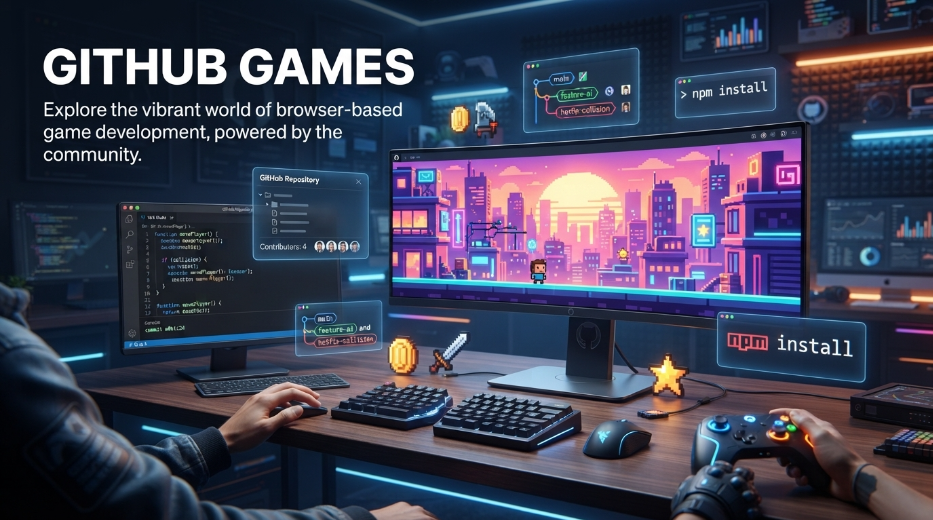
The term GitHub games usually refers to games hosted in GitHub repositories, published through GitHub Pages, or shared as open-source projects that anyone can explore, download, modify, or sometimes play directly in a web browser. GitHub is best known as a platform for software development, but its enormous collection of public projects also makes it an interesting place to discover browser games, experimental projects, classic recreations, and independent game-development experiments.
For people searching for GitHub games, the appeal is more than simply finding something entertaining. These projects can also provide an opportunity to see how games are built. A player can enjoy a small JavaScript game and then examine the source code to understand its mechanics, graphics, controls, and programming structure.
What Are GitHub Games?
GitHub games are not a single official category or service. Instead, the phrase describes games that developers have uploaded to GitHub repositories. Some are complete games, while others are prototypes, demos, educational projects, or experiments created with technologies such as JavaScript, HTML5, CSS, Python, C++, and game engines.
Many browser-based projects can be published using GitHub Pages. When configured correctly, a repository containing web files can become a playable website. This makes GitHub particularly useful for developers who want to share small games without creating a separate hosting platform.
provides repository tools that allow developers to store source code, manage changes, collaborate with others, and publish certain web projects.
Why Are GitHub Games Popular?
One reason GitHub games attract attention is accessibility. A browser game may require nothing more than opening a webpage, while downloadable projects can often be obtained directly from their repositories.
Another attraction is the open-source nature of many projects. Instead of seeing only the finished game, users can inspect the underlying code. This creates an unusual combination of entertainment and education.
For aspiring developers, a simple game can act as a practical programming lesson. Looking at how a character moves, how collision detection works, or how a scoring system is implemented can make programming concepts easier to understand.
Exploring Browser-Based GitHub Games
Browser games are among the easiest GitHub games to experience. Many are created with HTML, CSS, and JavaScript and can run directly inside a modern browser.
A typical repository might contain an HTML file that defines the game’s structure, JavaScript files controlling gameplay, and CSS files responsible for visual presentation. When the developer enables GitHub Pages, these files can potentially be served as a playable web application.
The quality varies considerably. Some projects are polished and surprisingly sophisticated, while others are small experiments designed primarily to demonstrate a programming technique.
GitHub Games for Learning Programming
One of the most valuable aspects of GitHub games is their educational potential. Games naturally combine several programming concepts, making them useful examples for beginners.
A basic game can demonstrate variables, functions, conditional statements, loops, event handling, arrays, object-oriented programming, animation, and user input. More advanced projects may introduce physics systems, artificial intelligence, networking, procedural generation, or sophisticated rendering.
Rather than simply copying an existing project, learners can study the code and gradually create their own version. Changing the player’s movement speed, modifying enemy behavior, adding a scoring system, or redesigning the interface can turn an existing project into a hands-on programming exercise.
How to Find Interesting GitHub Games
Finding GitHub games is relatively straightforward because GitHub provides search functionality across public repositories. Searching for phrases such as “browser game,” “HTML5 game,” “JavaScript game,” or “open source game” can reveal thousands of projects.
Repository descriptions are useful because developers often explain the game’s technology, controls, installation process, and licensing information. Checking the repository’s documentation before downloading or modifying anything is a good practice.
It is also worth paying attention to recent activity. A project that has been updated recently may be easier to run on current software, while an older repository could depend on outdated libraries or development environments.
GitHub Games and Open-Source Development
The connection between GitHub games and open-source development is particularly interesting. GitHub allows developers to make source code available to other programmers, encouraging collaboration and experimentation.
A game project can receive contributions from multiple developers. Someone might improve performance, another contributor could fix a bug, and another might add a new feature. This collaborative process is one reason GitHub has become an important part of modern software development.
For game developers, publishing a project publicly can also provide feedback from other programmers and players. Issues, pull requests, and discussions can become useful channels for improving a project.
Are GitHub Games Safe to Download?
Safety depends on the individual repository. Not every project published online should automatically be considered trustworthy.
When exploring GitHub games, users should examine the repository carefully before running unfamiliar executable files or scripts. A project’s documentation, source code, contributor history, and community activity can provide useful context.
Browser-based games are generally easier to evaluate because they can often be played without installing an unknown executable. However, users should still avoid entering sensitive information into unfamiliar websites and should use normal online security practices.
GitHub provides documentation explaining how repositories and security features work, making it a useful reference for understanding the platform.
The Role of GitHub Pages
GitHub Pages has helped make GitHub games especially accessible. Developers can use the service to publish certain static websites directly from repositories.
For a small HTML5 game, this can provide a convenient way to create a public playable page. A developer can update the repository and then publish changes through the associated site.
This approach is especially popular among students, hobby developers, and independent programmers who want to demonstrate their projects without maintaining traditional web hosting.
GitHub Games for Developers
For developers, GitHub games can become portfolio projects. A well-designed game demonstrates more than programming knowledge because it can showcase creativity, problem-solving, interface design, animation, and project organization.
A developer’s repository can also reveal how they structure files, document their work, manage version control, and handle development challenges. This makes a game repository potentially valuable when demonstrating technical skills.
Developers interested in game creation can also explore established open-source projects to learn different approaches to game architecture and development.
What Makes a Good GitHub Game?
A strong GitHub game does not necessarily need advanced graphics. Good gameplay, responsive controls, clear objectives, stable performance, and thoughtful design can make a simple project enjoyable.
From a technical perspective, clean source code and useful documentation also matter. A well-organized repository makes it easier for other developers to understand the project and potentially contribute to it.
For educational projects, simplicity can actually be an advantage. A small game with understandable code may teach more than an enormous project containing thousands of complicated files.
Conclusion
GitHub games offer an interesting combination of entertainment, programming, and open-source creativity. From simple browser experiments to ambitious independent projects, GitHub provides a huge environment where developers can publish and share their work.
For players, these projects can introduce new games and unusual experiments. For programmers, they offer opportunities to study real code and learn how interactive software is created. Whether you are looking for a quick browser game or inspiration for your next development project, exploring GitHub games can be a rewarding experience.
FAQs About GitHub Games
What are GitHub games?
GitHub games are games shared through GitHub repositories or published using services such as GitHub Pages. They can include browser games, prototypes, open-source projects, and downloadable games.
Can I play GitHub games in a browser?
Yes. Many web-based GitHub games are built with HTML5 and JavaScript and can be played directly through a browser when the developer has published them online.
Are GitHub games free?
Many are free to access, particularly open-source projects, but licensing varies. Always check the repository’s license and usage terms before redistributing or modifying a project.
Can I learn coding from GitHub games?
Absolutely. GitHub games can demonstrate practical programming concepts such as JavaScript, animation, game logic, user input, collision detection, and interface design.
Can I create my own game on GitHub?
Yes. You can create a repository for your project, upload your game files, document the project, and potentially publish a browser-based game using GitHub Pages.
more blog