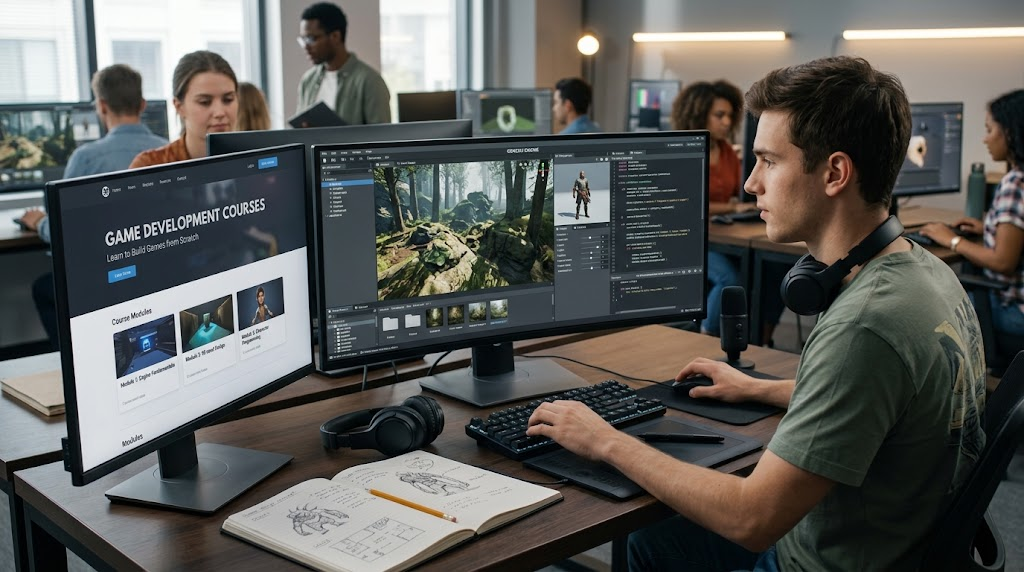
Game development courses have become an increasingly popular way to learn how video games are designed, programmed, tested, and published. Whether you are completely new to coding or already have experience with software development, the right course can provide a structured path from basic concepts to finished game projects.
Unlike simply watching random tutorials, game development courses can combine programming, game design, animation, sound, level creation, and practical projects in one learning experience. This makes them useful for students, hobbyists, aspiring indie developers, and people interested in pursuing careers in the gaming industry.
The best choice depends on your goals, preferred game engine, current skills, learning style, and the type of games you eventually want to create.
What Are Game Development Courses?
Game development courses are educational programs designed to teach the technical and creative skills required to create video games. Depending on the course, students may learn programming, game mechanics, 2D or 3D design, artificial intelligence, physics, animation, user interfaces, and optimization.
Some courses concentrate heavily on programming, while others focus more on game design or visual development. Comprehensive programs may cover the entire development pipeline, from the first concept through testing and release.
For beginners, game development courses can make the learning process easier because lessons are usually arranged progressively. Instead of trying to understand an entire game engine at once, students can learn individual concepts and gradually combine them into larger projects.
Why Learn Game Development?
The popularity of games has created opportunities across programming, art, design, animation, audio, production, and quality assurance. Learning game development can therefore be useful even if you do not ultimately become a professional game programmer.
One major advantage of game development courses is project-based learning. Building a playable game gives you a practical way to apply programming and problem-solving skills.
Game development can also strengthen broader technical abilities. Working with variables, logic, algorithms, debugging, version control, and interactive systems can provide experience that is relevant beyond the gaming industry.
Choosing the Right Game Engine
A major decision when comparing game development courses is the game engine they teach.
Unity is widely used for 2D and 3D projects and uses C# as its primary programming language. Unreal Engine is particularly well known for high-quality 3D graphics and provides both C++ programming and visual scripting through Blueprints.
Godot is another popular option, especially among independent developers and learners looking for an accessible open-source engine. Its scripting environment makes it relatively approachable for people beginning their game-development journey.
The ideal engine depends on your goals. A course should explain why a particular engine is being used rather than simply assuming that every learner has the same needs.
Game Development Courses for Beginners
Beginners should look for game development courses that start with fundamental concepts rather than immediately jumping into advanced systems.
A good introductory program may explain programming fundamentals, variables, functions, conditional statements, loops, object-oriented concepts, input handling, and basic game architecture.
The course should then connect those concepts to practical development. For example, students might create a simple character controller, implement collisions, build a basic level, add enemies, and eventually create a complete small game.
This approach can make programming less intimidating because learners immediately see how individual concepts affect something they can interact with.
Do You Need to Know Coding?
You do not necessarily need previous programming experience to begin game development courses.
Many beginner programs introduce coding from the ground up. Visual scripting systems can also help learners understand game logic without immediately writing large amounts of traditional code.
However, learning programming remains valuable for anyone who wants greater control over game mechanics and systems. Even developers who begin with visual tools can benefit from eventually understanding how code works.
What You Learn in Game Development Courses
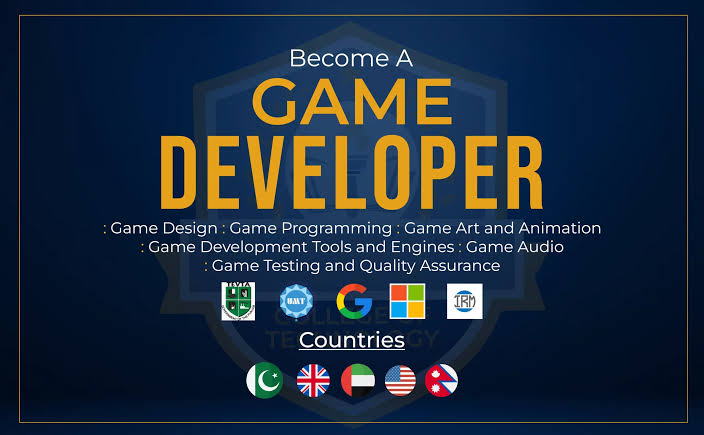
The curriculum varies considerably between game development courses, but several subjects appear frequently.
Programming is one of the most important areas. Students learn how to create gameplay systems, respond to player input, manage objects, and control game behavior.
Game design is another important component. It involves understanding player goals, difficulty, progression, feedback, pacing, and the overall experience.
Visual development may cover 2D sprites, 3D models, materials, lighting, animation, cameras, and visual effects. Some programs teach these subjects directly, while others concentrate primarily on programming and use pre-made assets.
Audio can also influence the quality of a game. Sound effects, background music, voice elements, and interactive audio can make an otherwise simple project feel significantly more polished.
Online vs. In-Person Game Development Courses
Online game development courses are attractive because they offer flexibility. Students can often learn at their own pace and revisit difficult lessons whenever necessary.
Platforms such as Unity Learn provide official learning materials, while Unreal Engine Learning offers educational resources for Unreal Engine.
In-person programs can provide direct interaction with instructors and classmates. They may also create opportunities for collaborative projects and networking.
Neither format is automatically better. A motivated learner can make excellent progress online, while someone who needs regular feedback may benefit from a classroom environment.
How Much Do Game Development Courses Cost?
The price of game development courses can range from free educational resources to expensive university programs.
Free resources can be an excellent starting point for beginners who want to determine whether game development is right for them. Official engine documentation and learning platforms often provide substantial educational material without requiring a traditional tuition payment.
Paid courses may provide structured curricula, instructor feedback, assignments, certificates, community access, or career-oriented projects.
Before paying for a program, examine the curriculum carefully. A higher price does not automatically mean better instruction.
Building a Game Development Portfolio
One of the most important outcomes of game development courses should be a portfolio of actual projects.
A portfolio allows potential employers, clients, collaborators, or communities to see what you can create rather than simply reading a list of completed classes.
Even small games can demonstrate useful skills. A polished two-dimensional platformer can show gameplay programming, level design, animation, UI development, and debugging ability.
As your experience grows, replace basic practice projects with increasingly original work. A strong portfolio should demonstrate both technical ability and your personal approach to game design.
Game Development Courses and Career Opportunities
Completing game development courses does not guarantee employment, but structured education can help develop relevant skills.
Possible career directions include gameplay programmer, technical designer, game designer, level designer, tools programmer, technical artist, QA tester, and independent game developer.
The industry also values teamwork. Professional game development typically involves collaboration among programmers, artists, designers, writers, producers, audio specialists, and other professionals.
For this reason, courses that include team projects can provide valuable experience beyond technical lessons.
How Long Does It Take to Learn Game Development?
There is no universal timeline for learning game development courses because game development includes many different disciplines.
A beginner can learn basic programming and create a simple game relatively quickly with consistent practice. Becoming comfortable with advanced systems such as artificial intelligence, multiplayer networking, procedural generation, optimization, or complex graphics can take considerably longer.
Consistency matters more than rushing. Spending regular time building small projects is generally more productive than completing dozens of tutorials without creating anything independently.
How to Get the Most From Game Development Courses
The most effective way to use game development courses is to treat lessons as a foundation rather than the final destination.
After learning a technique, try changing it. Modify the mechanics, create a different level, replace the artwork, or build a variation of the system. This turns passive learning into active problem solving.
It is also useful to keep projects small. A finished five-minute game can teach more practical lessons than an ambitious project that becomes impossible to complete.
As you progress, documentation becomes increasingly important. Official documentation from engine developers can help you understand features, limitations, and recommended development practices.
Common Mistakes New Developers Make
Many people beginning game development courses make the mistake of starting with a project that is far too ambitious.
Creating an open-world multiplayer RPG as a first project sounds exciting, but such a game requires enormous amounts of programming, art, design, networking, content creation, testing, and optimization.
Another common mistake is focusing entirely on tutorials. Tutorials are useful, but independent experimentation is what develops problem-solving skills.
Beginners should also expect bugs. Debugging is not a sign that you are failing at development; it is a normal part of creating software.
Conclusion
Game development courses can provide a structured and practical way to learn how games are created. From programming and game design to graphics, animation, audio, testing, and optimization, the field combines technical knowledge with creative thinking.
The best course is not necessarily the most expensive or advanced. It is the one that matches your current ability and gives you enough practical experience to build projects independently.
Start with manageable goals, choose an engine that fits your interests, practice consistently, and gradually build a portfolio. With patience and hands-on experimentation, game development courses can become the starting point for an exciting technical and creative journey.
FAQs About Game Development Courses
Are game development courses good for beginners?
Yes. Many courses are specifically designed for beginners and introduce programming and game engines from the basics.
Do I need coding experience?
No. Beginner courses can teach programming from scratch, although coding knowledge becomes increasingly valuable as projects become more advanced.
Which game engine should beginners learn?
Unity, Unreal Engine, and Godot are all reasonable choices. Your decision should depend on your goals, preferred programming language, and the type of games you want to create.
Can game development courses help me get a job?
They can help you develop relevant skills, but employment usually also requires practical projects, a strong portfolio, problem-solving ability, and teamwork skills.
Can I learn game development for free?
Yes. Official resources from Unity, Unreal Engine, Godot, and other communities provide free learning materials, although structured paid programs may offer additional support.