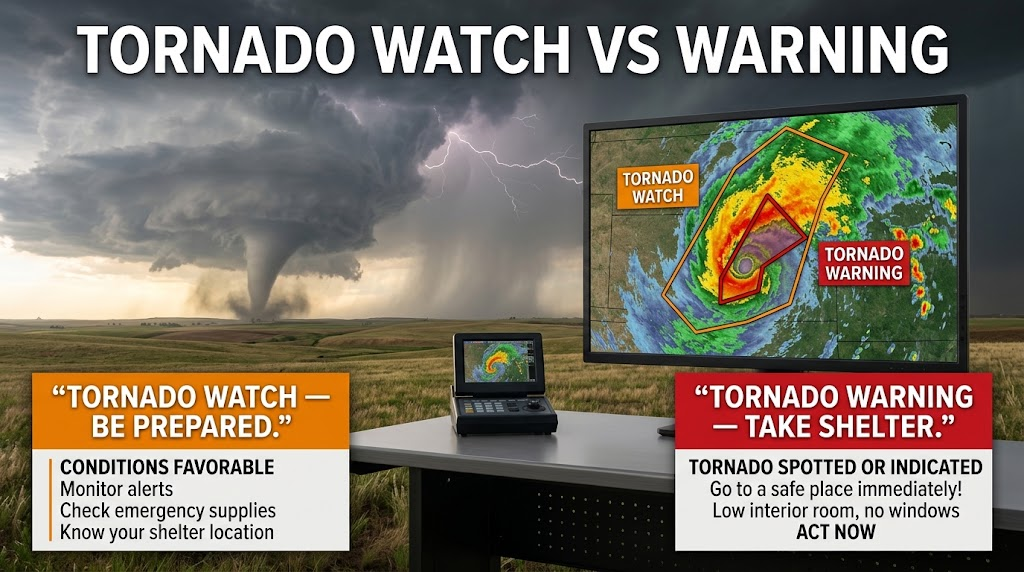
Understanding tornado watch vs warning can make a critical difference when severe weather develops. The two terms may sound similar, but they communicate very different levels of urgency. A tornado watch means conditions are favorable for tornadoes, while a tornado warning means a tornado has been detected or indicated and people in the affected area should take shelter immediately.
Knowing the difference between tornado watch vs warning helps you understand when to prepare and when to act. During severe weather, there may be very little time between a warning and dangerous conditions reaching your location, so understanding these alerts before a storm develops is essential.
Tornado Watch vs Warning: The Basic Difference
The simplest way to remember tornado watch vs warning is: watch means be prepared, while warning means take action.
A Tornado Watch is issued when atmospheric conditions are favorable for tornado development in and near a designated area. It does not mean a tornado is occurring or guaranteed to occur. Instead, it tells residents that the potential exists and that they should remain alert.
A Tornado Warning is much more urgent. The National Weather Service issues a warning when a tornado has been sighted or indicated by weather radar. People within the affected area should immediately move to an appropriate shelter.
What Is a Tornado Watch?
A Tornado Watch means that the atmosphere has ingredients capable of producing tornadoes. The watch area can be very large, potentially covering numerous counties or even multiple states.
When a tornado watch is active, you should not assume that a tornado is approaching your specific neighborhood. Instead, think of it as an advance alert. The weather situation has become favorable enough that you need to monitor updates and be ready to respond quickly.
According to the National Weather Service, tornado watches are generally issued for several hours, often in advance of severe weather.
What Should You Do During a Tornado Watch?
During a watch, preparation is the priority. Know where you will shelter if a warning is issued, keep your phone charged, monitor reliable weather information, and make sure everyone in your household knows the plan.
A watch is also a good time to move away from unnecessary outdoor activities. If you are traveling, consider where sturdy shelter may be available if conditions deteriorate.
The important point in the tornado watch vs warning comparison is that a watch gives you time to prepare before immediate danger develops.
What Is a Tornado Warning?
A Tornado Warning indicates a significantly more immediate threat. The National Weather Service says a warning is issued when a tornado is indicated by radar or sighted by trained spotters or other reliable observers.
When a tornado warning is issued for your location, you should take shelter immediately rather than waiting to see whether a tornado becomes visible.
Warnings generally cover a much smaller geographic area than watches because they are focused on the storm and locations that could be affected.
This distinction is central to tornado watch vs warning: a watch covers the possibility of tornadoes across a broader region, whereas a warning identifies an area facing an immediate or imminent tornado threat.
Tornado Watch vs Warning: Area and Timing
The geographic difference between the two alerts is important.
A Tornado Watch can cover a large portion of a state or even several states. Its purpose is to give people advance notice that the atmospheric environment could support tornadoes.
A Tornado Warning is much more localized. The National Weather Service notes that warnings are typically focused on an area around the size of a city or small county, although the exact size varies depending on the storm and forecast office.
Timing also differs. Watches commonly remain active for several hours, while tornado warnings are generally much shorter and focus on the immediate threat from a particular storm. Some National Weather Service guidance describes warnings as typically lasting around 30 minutes, though their duration varies with the situation.
What to Do When a Tornado Warning Is Issued
When comparing tornado watch vs warning, the most important safety difference is what you should do immediately.
During a warning, move to an interior room on the lowest floor of a sturdy building and stay away from windows. The National Weather Service recommends putting as many walls as possible between you and the outside and protecting yourself from flying debris.
A basement can provide strong protection when available. If there is no basement, an interior room, hallway, bathroom, or closet on the lowest floor can provide a safer location than an exposed room with windows.
People in mobile homes should move to a sturdy, substantial shelter when possible. The National Weather Service specifically advises people in mobile homes, vehicles, or outdoors to move to the closest substantial shelter.
Can a Tornado Warning Happen Without a Watch?
Yes. This is an important point in understanding tornado watch vs warning.
A Tornado Watch does not have to be issued before a Tornado Warning. The National Weather Service explains that warnings can be issued without a watch already being in effect.
This can happen because tornado-producing storms may develop or intensify unexpectedly. In some situations, issuing a broad watch is not practical, particularly when a severe storm affects a relatively small area or develops quickly.
Therefore, never ignore a Tornado Warning simply because there was no previous watch.
Tornado Watch vs Warning During Severe Weather
Severe weather can evolve rapidly, which is why staying informed matters.
During a tornado watch, continue monitoring official weather information and be prepared to move to shelter. A watch can end without a tornado affecting your location, but that does not mean the alert was unnecessary. It means the atmosphere presented a sufficient risk to justify preparation.
During a tornado warning, the situation is different. You should already be moving toward shelter rather than continuing normal activities.
The National Weather Service recommends having multiple ways to receive warnings because weather information can be missed when relying on only one source.
Tornado Emergency vs Tornado Warning
There is also a third alert that people may encounter: a Tornado Emergency.
A Tornado Emergency represents the highest level of tornado alert used by the National Weather Service. It may be issued when a violent tornado has been confirmed and poses a severe threat to human life and catastrophic damage.
This does not replace the importance of understanding tornado watch vs warning. Instead, it represents an even more urgent situation within the warning system.
If a Tornado Emergency is issued, people in the affected area should seek the safest available shelter immediately and remain there until official information indicates the danger has passed.
Why Understanding Tornado Alerts Matters
The difference between a watch and warning is more than terminology. It represents two different stages of decision-making.
A watch gives you an opportunity to prepare. You can identify your shelter, gather important supplies, check weather alerts, and make sure family members understand what to do.
A warning tells you that preparation time has effectively ended. You should act.
That simple distinction makes tornado watch vs warning an important topic for anyone living in an area where severe thunderstorms and tornadoes can occur.
Common Mistakes People Make
One common mistake is treating a tornado watch as proof that a tornado is already nearby. It is not. A watch means tornadoes are possible within the watch area.
Another mistake is treating a warning as something to monitor casually. A warning requires action, particularly when your location is included in the warning area.
Some people also wait until they personally see a tornado before taking shelter. This can be dangerous because tornadoes can be hidden by rain, darkness, terrain, or other weather conditions.
Understanding tornado watch vs warning means trusting official alerts rather than waiting for visual confirmation yourself.
How to Prepare Before Tornado Season
Preparation should happen before a Tornado Watch or Warning is issued.
Choose the safest shelter location in your home and make sure everyone knows where it is. Keep important supplies accessible, and make sure emergency alerts can reach you even when you are sleeping.
The National Weather Service recommends reviewing your emergency plan and supplies when a Tornado Watch is issued.
For additional safety information, the official National Weather Service tornado safety guidance provides current information about watches, warnings, sheltering, and tornado emergencies.
For a website publishing this article, useful internal links could include existing pages about severe thunderstorm safety, emergency preparedness, weather alerts, hurricane watches, or flash-flood warnings. Internal links should point only to relevant pages that actually exist on the same website.
Tornado Watch vs Warning: Quick Memory Trick
If you remember only one thing about tornado watch vs warning, remember this:
Watch = Be Prepared.
Warning = Take Action.
A watch means conditions are favorable for tornadoes. A warning means a tornado has been detected or indicated and people in the affected area need to seek shelter.
That simple distinction can help you respond faster when severe weather develops.
Conclusion
Understanding tornado watch vs warning is one of the most important parts of tornado preparedness. A watch means tornadoes are possible and gives you time to prepare, while a warning means a tornado has been sighted or indicated by radar and you should seek shelter immediately.
The National Weather Service emphasizes that people should act quickly when a warning is issued and should not wait for a tornado to become visible.
By knowing the difference between these alerts, identifying a safe shelter ahead of time, and monitoring reliable weather information, you can be better prepared to respond when dangerous weather threatens.
FAQs About Tornado Watch vs Warning
What is the difference between a tornado watch and warning?
A tornado watch means tornadoes are possible. A tornado warning means a tornado has been detected or indicated and you should take shelter immediately.
Which is more serious, a tornado watch or warning?
A tornado warning is more urgent because it indicates an immediate or imminent threat to the affected area.
How long does a tornado watch last?
Tornado watches generally last several hours, although the exact duration depends on the weather situation.
Can a tornado warning happen without a watch?
Yes. A Tornado Warning can be issued even when there was no Tornado Watch beforehand.
Where should you go during a tornado warning?
Go to an interior room on the lowest floor of a sturdy building, stay away from windows, and protect yourself from flying debris.